Stakeholders Engagement
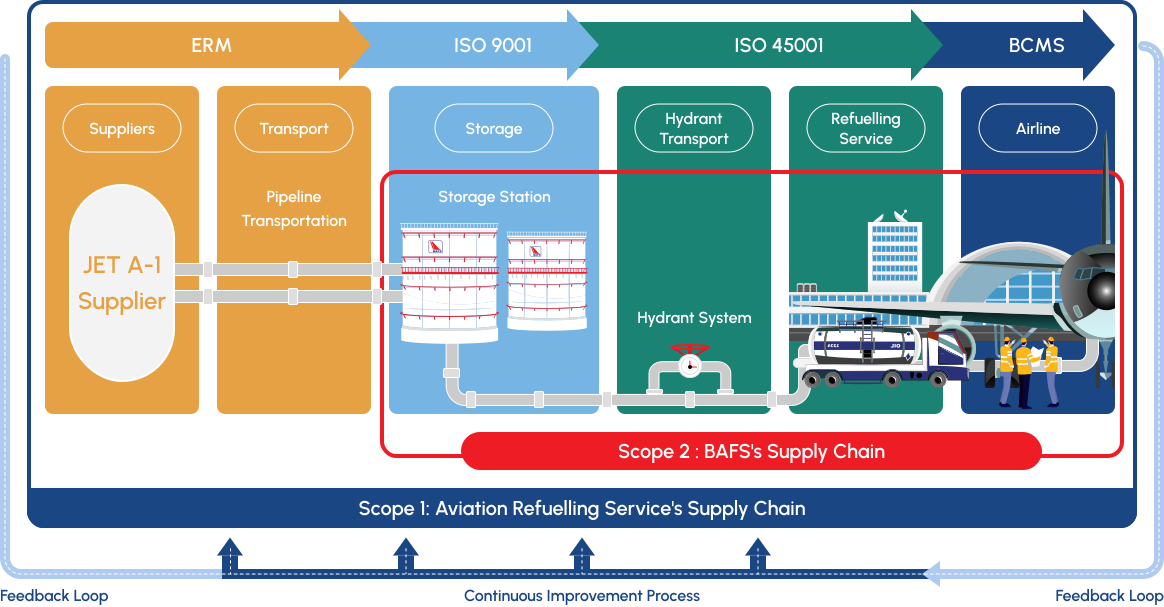
Scope 1: The supply chain before the Company’s fuel reception and storage process, which is managed by the fuel owners and fuel transportation companies.
Scope 2: The supply chain within the process of fuel reception, storage, and distribution to airlines through high-pressure underground pipelines at the airport, which is managed by the Company and its subsidiaries.
BAFS defines stakeholder groups by analyzing those either positively or negatively affected by the Company’s operations, or both, throughout its value chain, considering environmental, social, and governance dimensions.
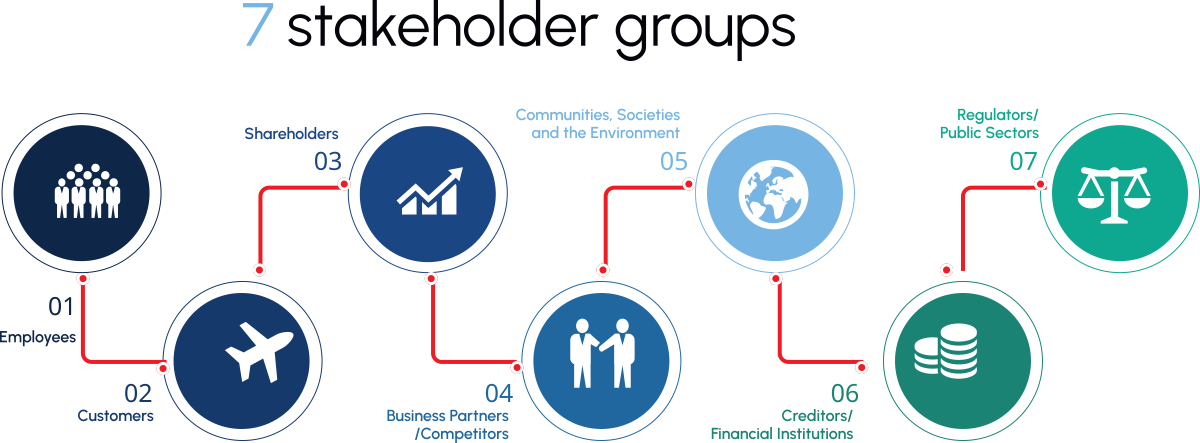
| Stakeholders | Mission |
|---|---|
| Employees | Enhance professional work capabilities and achieve a quality work-life filled with happiness, while upholding equity and human dignity. |
| Customers | Focus on value creation and customer satisfaction, as well as enhancing the quality and safety of products and services in accordance with international standards. |
| Shareholders | Deliver appropriate, stable, and sustainable returns through governance-driven management principles. |
| Business Partners and Competitors | Conduct business together based on principles of good corporate governance, legal standards, and fair-trade regulations, with a commitment to building trust and fostering strong, long-term collaboration. |
| Communities, Society and Environment | operate with responsibility towards the community, society, and the environment, and actively contribute to the enhancement of sustainable quality of life by creating shared value with the community or society. |
| Creditors and Financial Institutions | Foster trust by strictly adhering to the terms and agreements with creditors and financial institutions, while maintaining strong financial discipline. |
| Regulators and Government Agencies | Operate in compliance with relevant laws, regulations, requirements, and rules with responsibility, accuracy, and transparency, while supporting policies to enhance the national energy security. |
Stakeholders Engagement Plan
BAFS emphasizes regular communication and engagement with all stakeholders through appropriate channels which allows the Company to understand issues of interest, concerns and feedback of each stakeholder group and incorporate them into decision-making processes and business planning effectively. This approach is a key mechanism for understanding stakeholders’ needs and expectations, which impact the Company’s ability to achieve its target of sustainable growth.
Expectations and Concerns
- Compensation, benefits, and job security
- Clear performance evaluations and career growth opportunities.
- Workplace safety and occupational health
- Communication on business direction and performance
- Positive work environment and employee well-being
- Continuous learning and skill development
Responses
- Ensure fair compensation in compliance with the legal minimum wage. However, the Company currently offers wages above this minimum
- Provide appropriate benefits for employees of all genders, age groups, and lifestyles
- Communicate employee benefits and organizational activities, including holding discussion channel on welfare and benefits through the Employee Welfare Committee, which consists of elected employee representatives from all operational sites
- Announce the annual performance evaluation criteria and allow employee participation in setting individual performance indicators
- Conduct employee satisfaction and engagement assessments and report the results annually
- Implement continuous training and skill development programs throughout the year
- Conduct regular emergency response and business continuity plans
- Organize Happy Hour activities at each operational site and HR Roadshows quarterly
- Improve workplace, environment, and working procedures to align with current workplace trends
Targets
- Employee engagement score not less than 80%
- Zero workplace accidents causing absence over three days
- Zero occupational diseases leading to permanent disability
Engagement Approach and Frequency
- Town hall meetings held twice a year in Q1 & Q3 for company performance updates and open discussions for creative opinions, concerns, suggestions
- Weekly Highlights on company news and activities provided via BAFS Communication emails
- Employee satisfaction and engagement surveys conducted quarterly
- HR roadshows and Happy Hour activities at all operational sites quarterly
- Fair and confidential complaint and suggestion channels through multiple platforms, including the website, email to the Executive Chairman, or trusted supervisors at all levels
- Emergency response and business continuity plans drills participating quarterly
Expectations and Concerns
- Quality and responsive service that meets customer needs
- Safe, standardized, and on-time service delivery
- Effective customers’ need responsiveness
- Protection of customer confidentiality
- Collaboration for service improvement
- Prevention of threats that could disrupt service or business operations
Responses
- Implement efficient and balanced supply chain management practices
- Management system for ISO 9001, ISO 22301, and ISO 45001
- Comply with Aviation Fuel Quality Control and Operating Standards from the Joint Inspection Group (JIG)
- Advocate for the use of Sustainable Aviation Fuel (SAF) in Thailand
- Conduct annual customer satisfaction evaluation to analyze and develop service improvement plans
- Respond promptly and fairly to customer complaints
- Implement policies and guidelines for customer data security
Targets
- On-time service performance: BKK at least 99.99%, DMK at least 99.80%
- Zero direct aircraft-related accidents
- Critical business functions must be restored: BKK MAC 70% RTO within 2 hours, DMK MAC 60% RTO within 2 hours
Engagement Approach and Frequency
- Customer engagement activities and customer visits to gather insights on customer needs and expectations in accordance with the annual plan
- Annual customer satisfaction evaluation surveys
- Participation in the Airline Operators Committee (AOC) meetings quarterly
- Complaint and suggestion channels provided
Expectations and Concerns
- Transparency in governance and sufficient disclosure of information
- Appropriate and continuous investment returns
- No illegal issues impacting business operations
- New market openings or expanding service offerings
- Sustainable business growth plan
- Business continuity plans in place to prevent or manage disruptions
Responses
- Establish and adhere to good governance and business ethics policies
- Establish risk management policy
- Establish communication and disclosure policies to ensure equal and transparent information sharing with stakeholders
- Engage with shareholders directly through meetings, seminars, and discussions to promote effective dialogue and strengthen relationships
- Develop a 5-year strategic plan (2025-2029) for clear business direction
- In place business continuity management system in case of service disruptions
Targets
- CGR evaluation score from IOD not less than 85%
- Performance aligned with ISO 9001 and ISO 22301 quality objectives
- Critical business functions must be restored: BKK MAC 70% RTO within 2 hours, DMK MAC 60% RTO within 2 hours
Engagement Approach and Frequency
- Annual shareholders meeting
- Annual report, 56-1 One Report, and sustainability report
- Quarterly result announcements
- Investor relations activities according to the annual plan
- Complaint or suggestion channels provided through complaint management systems
Expectations and Concerns
- Transparent procurement process with timely payments
- Transparency in corporate governance and fair treatment of suppliers, business partners and competitors, avoiding discrimination
- Strict adherence to agreed terms and legal requirements
- Compliance with fair competition rules and maintaining a positive reputation for competitors
- Effective internal management to handle across supply chain impacts, both in normal and emergency situations
- Fair operating practices and anti-competition business practices
Responses
- Establish the Supplier Code of Conduct to ensure corporate governance
- Establish policies for good governance and anti-corruption measures and practices
- Implement effective and balanced supply chain management system
- Incorporate Sustainable Procurement plan
- Provide necessary communication on relevant issues with business partners through various media channels regularly
- In place business continuity management system, with all employees participating in emergency response and business continuity drills as scheduled
- Establish payment terms with suppliers not exceeding 60 days
Targets
- CGR evaluation score from IOD is or more than 85%
- Performance aligned with ISO9001 and ISO22301 quality objectives
- Recovery of critical activities: BKK MAC 70% RTO within 2 hours, DMK MAC 60% RTO within 2 hours
- Payment terms for partners within 60 days
Engagement Approach and Frequency
- Regular business meetings according to operational schedules
- Regular communication via email and phone
- Annual partner seminars
- Annual site visits to partners as per plan
- Complaint and suggestion through complaint channels
Expectations and Concerns
- No adverse impact on communities, society, and the environment from business operations.
- No negative effects on biodiversity from business activities.
- Joint community and society development projects aligned with the needs, concerns, and suitability of each local community.
- Uphold health and well-being of local communities surrounding business operation areas.
- Contribute to the economic development of surrounding business operation communities.
- Provide training and support for safety in case of emergencies or disasters, including fire-fighting equipment.
- Inform communities in advance of any actions that may impact them or lead to misunderstandings.
Responses
- Assess community and social impact in every business process
- Conduct annual surveys to measure satisfaction with community engagement activities
- Collaborate closely with local government and local private organizations
- Communicate relevant or concerned issues to communities via local media, community leaders, or local government organizations
- Designate the Company’s community coordination unit to interact with communities, implement policies and operational guidelines for new projects on potential biodiversity impact
- Develop GHG emission reduction master plan
- Provide official channels for complaints and suggestions
Targets
- Community satisfaction score is or more than 80%
- Emission Reduction from baseline 2024 in Scope 1, 2 and 3 for > 3.46%
- Become Net-Zero organization by 2050
- Ensure No Net Loss (NNL) from business activities on biodiversity
Engagement Approach and Frequency
- Regular visits in accordance with the community engagement plan or appropriate occasions
- Organize community, society and environmental development projects and activities with quarterly reporting
- Meetings with local communities and organizations
- Provide Channels for complaints and suggestions
- Annual CDP and TCFD reports.
- Participation in annual emergency response and business continuity plan exercises
Expectations and Concerns
- Strict and fair adherence to contractual agreements and terms
- Clear targets and direction for the Company’s future business expansion, along with investments that provide appropriate returns
- Progress of projects in line with the outlined plans
- Measures and practices to prevent or resolve default issues
- Business stability under abnormal conditions, with contingency plans and risk management strategies
- Provide knowledge of key factors affecting business operations through sufficient information disclosure
Responses
- Establish good governance policies and strictly adhere to business code of conduct
- Implement a business continuity management system, with all employees participating in regular emergency response and business continuity drills
- Establish good corporate governance policies, including anti-corruption and anti-bribery practices
- Establish payment terms with suppliers not exceeding 60 days
Targets
- CGR evaluation score from IOD is or more than 85%
- Performance aligned with ISO 9001 and ISO 22301 quality objectives
- Recovery of critical activities: BKK MAC 70% RTO within 2 hours, DMK MAC 60% RTO within 2 hours
- Payment terms for partners within 60 days
Engagement Approach and Frequency
- Annual Report, 56-1 One Report, and Sustainability Report
- Quarterly performance announcements
- Payment notification letter according for occurred transactions
- Regular meetings with relevant sectors as scheduled
- Regular audits of the Company’s operations by external parties
Expectations and Concerns
- Compliance with laws or exceeding legal requirements related to air pollution emissions, waste management, and wastewater treatment and discharge
- Adherence to the service standards of Airports of Thailand Public Company Limited (AOT).
- Implement safety and environmental management system
- Processes and procedures in place to prevent environmental impacts
- Compliance with relevant laws, regulations, and requirements for business operations with responsibility and transparency
- Sufficient disclosure of information and transparency on corporate governance practices
Responses
- Operate in accordance with guidelines, orders, and policies from relevant regulatory and government agencies
- Operate safely and comply with standards
- Strictly adhere to laws and legal requirements
- Regularly monitor and assess environmental impacts from business activities
- Achieve certification for management systems: ISO 9001, ISO 22301 and ISO 45001
- Establish tax policies
Targets
- CGR evaluation score from IOD is or more than 85%
- Performance aligned with ISO 9001 and ISO 22301 quality objectives
- Recovery of critical activities: BKK MAC 70% RTO within 2 hours, DMK MAC 60% RTO within 2 hours
Engagement Approach and Frequency
- Preparation and submission of the annual report with supporting documents
- Issuing notification and permission request letter
- Regular communication via email and phone
- Meetings with relevant authorities according to schedules.
- Participation in emergency response and business continuity plan exercises
- Regular audits of the Company’s operations by regulators