Biodiversity Management
Biodiversity Management
The 16th Meeting of the Conference of the Parties to the UN Convention on Biological Diversity (CBD COP16) has emphasized that “Biodiversity” has become a critical global agenda that all sectors must integrate into their operational strategies. This is particularly vital for the business sector, which utilizes natural resources and may directly impact ecosystems. In accordance with the Kunming–Montreal Global Biodiversity Framework, which aims to reduce risks and impacts on nature and support the transition toward sustainable development, BAFS recognizes its role and responsibility as an energy and aviation infrastructure organization. Given its connection to ecosystem areas in multiple dimensions, the Company is accelerating the integration of nature-related issues into corporate management to create a balance between business growth and long-term environmental conservation.
Biodiversity Management Targets

Short-term Target
Comprehensive biodiversity risk assessments covering
7 operational areas
Systematically develop a Biodiversity Action Plan (BAP) for management, conservation, and restoration in areas with high to very high risk.
100%
No deforestation across all activities.
No

Long-term Targets
Achieve No Net Loss (NNL) of biodiversity
No Net Loss
by 2030
Achieve
Net Positive Impact (NPI)
by 2050
Ensure business operations result in
Zero Deforestation
by 2035
Zero
complaints regarding biodiversity management

Biodiversity Policy
Rectangle 7, TextboxBAFS is committed to avoiding activities that may result in Biodiversity Loss and impact Ecosystem Services throughout its entire value chain. Consequently, the Company has enacted the Biodiversity Policy as a guideline to ensure that business operations align with United Nations Sustainable Development Goal 15: Life on Land. Furthermore, long-term targets have been established to ensure that the Company’s business activities achieve No Net Loss (NNL) of biodiversity value by 2030 and reach a Net Positive Impact (NPI) by 2050 to sustain biodiversity. In cases where impacts are unavoidable, measures to mitigate biodiversity loss and restore the affected areas must be implemented as swiftly as possible. This includes prioritizing business activities that ensure Zero Deforestation (No Gross Deforestation) across all activities by 2035. The Company also develops a Biodiversity Action Plan (BAP) with clear key performance indicators to achieve these targets and enhance the Company’s biodiversity management standards.
Biodiversity Policy
Biodiversity Management
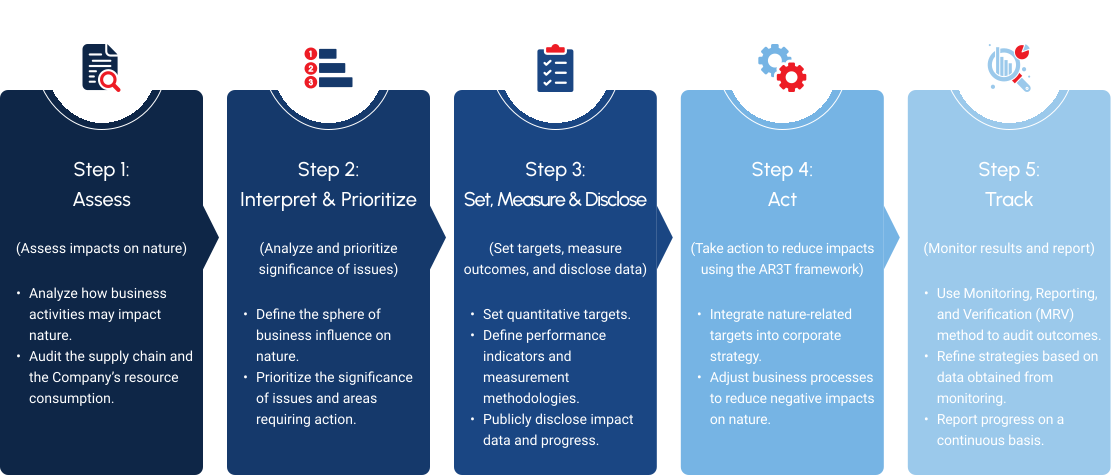
The Company’s biodiversity management adheres to the Science Based Targets for Nature (SBTN) Framework, a structured guideline that enables organizations to set nature-related targets based on scientific principles, addressing challenges concerning biodiversity and natural resources while aligning with global objectives, such as the Global Biodiversity Framework and the Sustainable Development Goals (SDGs). Implementing the SBTN framework not only mitigates environmental risks but also creates business opportunities, enhances stakeholder confidence, and supports the responsible use of resources.
Science Based Targets for Nature (SBTN) Framework
Biodiversity Risk Assessment
In 2025, the Company conducted a biodiversity risk assessment across the current operational areas and under-development projects. The "WWF Biodiversity Risk Filter," developed by the World Wide Fund for Nature (WWF), was utilized to evaluate significant physical and reputational risks throughout the value chain. The assessment results enabled the Company to prioritize areas with high biodiversity risk, leading to the development of appropriate mitigation and monitoring measures tailored to the specific context of each location.
The assessment identified operational areas with significant high-level physical and reputational risks as follows:
- Physical Risk: Don Mueang Aviation Fuel Storage Station and Phichit Depot
- Significant Reputational Risk: Solar Power Project, Prachinburi (ATCE 1, 2) and Solar Power Project, Prachinburi (ATCE 3).
However, no operational areas were found to be located near areas of Critical Biodiversity. Further details regarding the risk assessment results and biodiversity management approaches can be found in the Biodiversity Risk Assessment Report.
Total number of operational areas used in operations
7 Operational Areas
105.18 Hectares
Biodiversity impact assessments conducted for operational areas
7 Operational Areas
105.18 Hectares
Number of operational areas located near critical biodiversity areas
0 Operational Areas
0 Hectares
Number of operational areas with biodiversity management plans
4 Operational Areas
50.64 Hectares
Biodiversity Action Plan: BAP
The Biodiversity Action Plan (BAP) has been established as a systematic framework to prevent and mitigate impacts on ecosystems and habitats. This plan aligns with the principles of the UN Convention on Biological Diversity (CBD), which promotes conservation and the sustainable use of biological resources which further integrates key outcomes from the Conference of the Parties (COP), emphasizing the prevention of biodiversity loss, the mitigation of business-related impacts, and multi-stakeholder engagement. To govern its planning and monitoring processes, the Company has adopted No Net Loss (NNL) and Net Positive Impact (NPI) principles to ensures that operations not only minimize negative impacts but also contribute to tangible restoration and conservation efforts. Furthermore, the Company is committed to achieving Zero Deforestation (No Gross Deforestation) across all activities to ensure business growth coexists with long-term biodiversity sustainability.
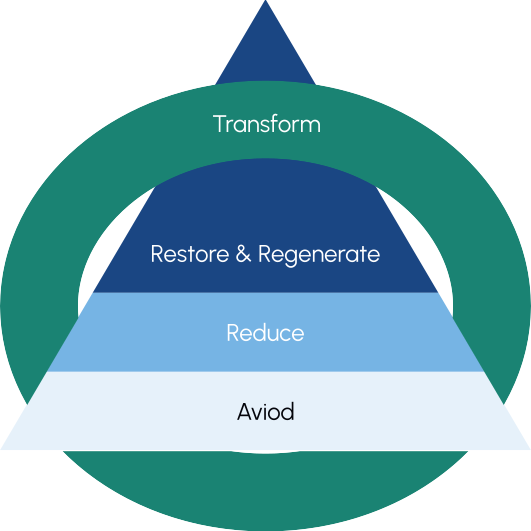
Moreover, the AR3T Action Framework has been integrated under the Science-Based Targets for Nature (SBTN) into the management practices to provide a systematic and verifiable approach to prevent, avoid, reduce, and restore biodiversity impacts arising from corporate activities.
AR3T Action Framework
Avoid
Avoid new impacts that may occur at significant levels.
Reduce
Reduce existing impacts resulting from operational activities and the supply chain.
Restore
Restore degraded or affected areas to regain biodiversity levels close to their original state.
Regenerate
Support the regeneration and enhance natural ecosystem abundance.
Transform
Drive organizational transformation.